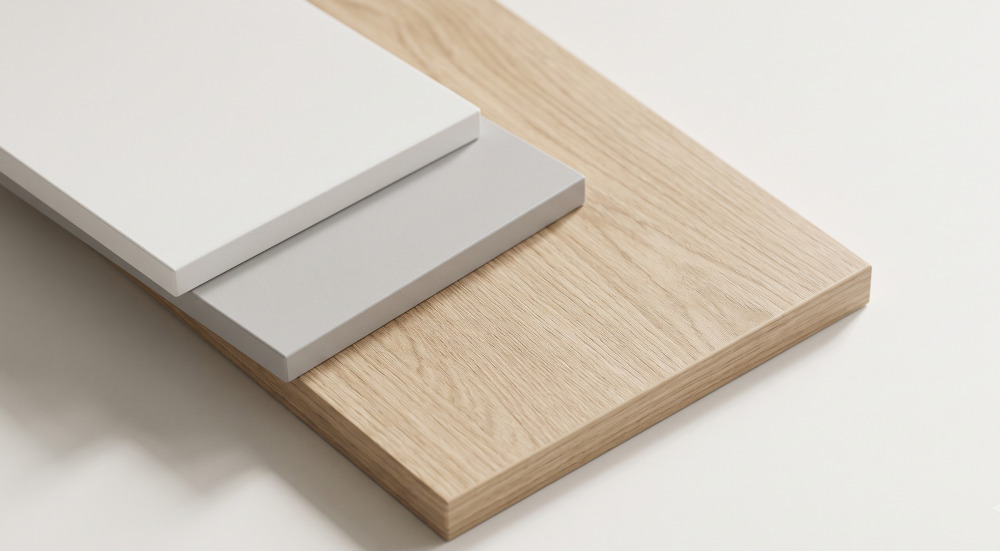
When building kitchen carcasses, it can often be difficult to separate MDF, plywood, and melamine board, especially if you aren’t an expert when it comes to sheet materials!
It’s a very common question, and if you’ve spoken to someone who went with MDF, that doesn’t necessarily mean plywood or melamine wouldn’t be a better choice for you.
So, here’s a straightforward breakdown that we hope helps you pick the right option before you cut a single sheet.
What Each Board Actually Is
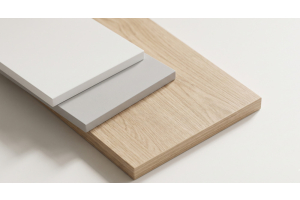
MDF is short for medium-density fibreboard and is made from compressed wood fibres and resin. Dense, smooth, and consistent, it’s fantastic if you want to paint a kitchen unit, but it won’t thrive in moisture-prone areas and is heavier than most alternatives.
Plywood is built from cross-layered wood veneers bonded together. That cross-grain construction gives it serious strength and means it holds screws better than MDF. It's also lighter for its size, and moisture-resistant grades are available.
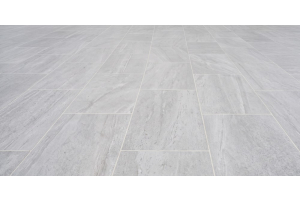
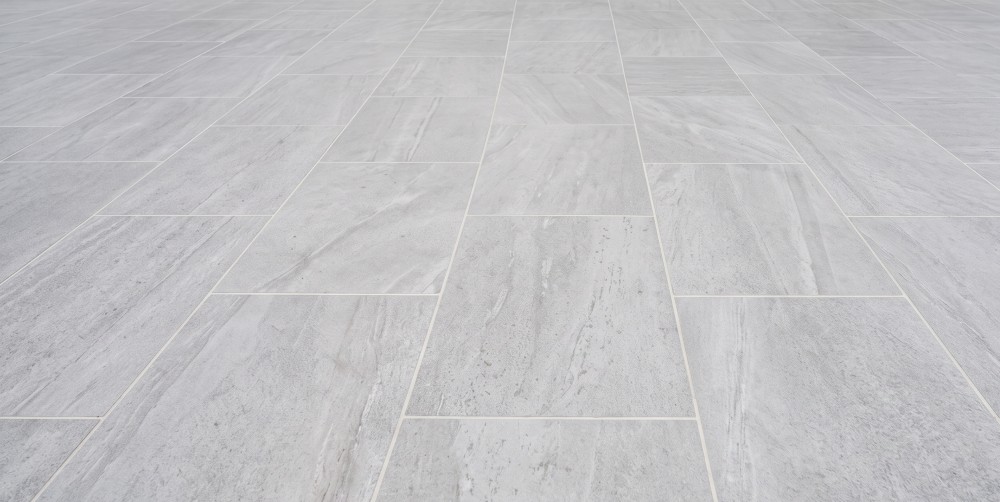
We’ve had many questions about porcelain paving recently, with more people around the North East looking to upgrade their garden during the summer months.
Once you’ve seen a well-laid porcelain patio, you understand why concrete flags don’t really cut it anymore. So what does it actually cost to do it right?
Porcelain Paving Cost Per m²
Materials range from around £25 to £65 per m² depending on the range and finish. Most residential jobs land somewhere between £30 and £50 per m². Premium collections from the Talasey Group sit towards the top of that, but the slab quality shows it. Dimensions are consistent, the finish holds up, and you are not chasing colour variations across a batch.
Cheaper slabs can look fine stacked in a yard. The problems show up on site when thickness varies or colour batches don't match, and they show up again a few winters later.
Sub-Base and Sharp Sand Costs
The slabs are the visible bit, but the sub-base is what makes or breaks the job. Get it wrong and you