


More and more people use home offices nowadays, with a massive rise in remote working. The first things that tend to come to mind when creating the most efficient working space inside a house are comfortable seating, proper desks, good lighting, etc.
We should acknowledge that all of the above are very valid, but without good acoustics, the room will feel echoey, meeting calls can feel unprofessional, and overall concentration can be impacted by external noise.
Are you a North-East customer looking to improve the sound quality of your home office? Or a tradesperson working on a relevant project? Read on, as we explain how to choose the best acoustic wall panels for home offices.
Best Wall Panel Option for Most Home Offices
For UK standard rectangular rooms between 10 and 20m², fabric wrapped acoustic panels mounted on the walls behind your desk and opposite the main reflective surface are often chosen, as they deliver the best improvement.
In terms of NRC, aim for panels at 0.80 or higher that cover around 25% of the total wall surface. Aesthetically, timber slat panels are a good option, but fabric panels offer better pure absorption at a lower cost.
| Panel Type | Best For | Sound Absorption (NRC) | Cost Tier | Installation Type |
| Fabric-Wrapped Panels | Maximum absorption, recording, and calls | 0.80 to 1.00 | Budget to mid | Wall-mounted |
| Timber Slat Panels | Design-led offices, open-plan spaces | 0.55 to 0.75 | Mid to premium | Wall or ceiling |
| Foam Tiles | Small rooms, casual use | 0.40 to 0.65 | Budget | Wall-mounted |
| Ceilling Baffles | Large rooms, high ceilings | 0.75 to 0.95 | Mid to premium | Ceiling-suspended |
Fabric vs Timber Slat Acoustic Panels
Fabric-wrapped panels consist of a dense mineral wool or polyester core covered in stretched acoustic fabric. They absorb sound across a broad frequency range and are the most cost-effective option when performance is the priority. They suit neutral, functional home offices where the panel itself doesn't need to be a design feature.
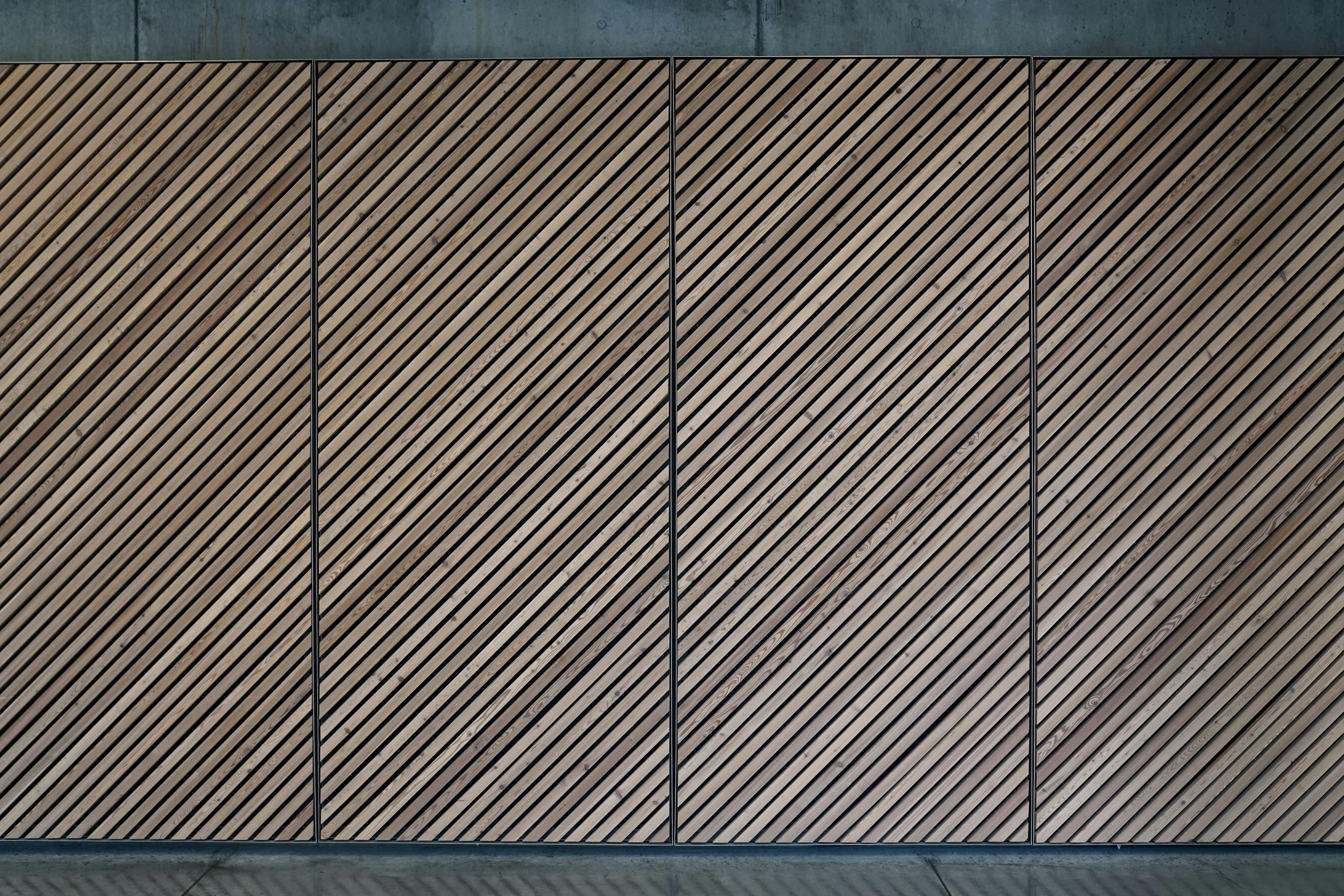
Timber slat panels (typically engineered wood slats over an acoustic felt backing) have become increasingly popular in home renovation projects across the North East. They offer a warmer, more architectural finish and perform well in open-plan rooms where you want acoustic control without covering walls in foam. The trade-off is a slightly lower NRC rating compared to fabric panels of equivalent thickness.
Understanding NRC Ratings
NRC stands for Noise Reduction Coefficient. It measures how much sound a material absorbs on a scale of 0 to 1, where 0 reflects all sound, and 1 absorbs all sound. A panel rated 0.85 absorbs 85% of the sound that hits it. For a home office, panels rated 0.75 and above will make a meaningful difference to echo and clarity. Anything below 0.60 is better suited to light background noise reduction rather than serious acoustic treatment.
Wall-Mounted vs Ceiling-Mounted
Wall-mounted panels are the standard starting point. Position them at ear height on the primary reflection points, namely the wall directly behind your monitor, the side walls at the first reflection point from your speakers or voice, and behind your seating position if space allows.
Ceiling panels or suspended baffles become relevant in rooms with high ceilings or hard flooring where wall panels alone are insufficient. They are more common in commercial fit-outs but increasingly practical for larger home offices. If your room has exposed beams or a vaulted ceiling, ceiling treatment is the first consideration.
Room Size and Panel Placement
A room under 10m² will respond well to four to six standard panels placed strategically. Covering every surface is unnecessary and can create an overly dead acoustic that feels unnatural.
For rooms between 15 and 25m², increase coverage to eight or more panels and consider combining wall and ceiling treatment. Avoid placing all panels on one wall. Instead, distribute them to address sound from multiple angles.
Echo Reduction vs Soundproofing: Know the Difference
These two terms are frequently confused, so it’s important to differentiate. Acoustic panels reduce echo and reverberation inside a room by absorbing sound that would otherwise bounce off hard surfaces.
They improve how your space sounds internally. Soundproofing prevents sound from travelling between rooms and requires structural intervention, such as mass-loaded vinyl, resilient channels, acoustic plasterboard, and sealed gaps.
If your goal is to stop noise from a busy road or adjacent room from reaching your home office, panels alone will not achieve that. If your goal is clearer calls, less fatigue, and a more professional acoustic environment, panels are exactly the right solution.
Where to Source Acoustic Panels in the North East
Joseph Parr Middlesbrough stocks acoustic panels suitable for both home renovations and commercial fit-outs, with reliable supply serving Teesside, Benton, and Stockton.
Whether you are fitting out a single home office or managing a larger commercial project, the team is happy to advise on the right panel specification for your room size and requirements.